Welcome to

Impact Investors Foundation

Our overarching goal is to promote the growth and culture of impact investing in Nigeria.

Formerly known as the Impact Investing Alliance of Nigeria (IIAN), IIF was founded in 2019 as a multi-sector collaborative comprising the Ford Foundation, Africa Capital Alliance, BusinessDay Media, Bank of Industry and Dalberg Advisors.

Stakeholders are critical to our work. For this reason, IIF collaborates with them to unlock private capital for social investments in Nigeria. We are committed to eliminating the barriers to impact investing by building an effective ecosystem that supports the growth of investment pipelines and sustainable impact.


Secretariat
Maria Etemore
Pics

KNOWLEDGE SHARING AND NETWORKING

Impact Investors Foundation is working to raise awareness about impact investing in Nigeria through knowledge sharing and networking. IIF, through its programmes and activities, is sharing knowledge and expertise among stakeholders across levels of the impact investing ecosystem. By sharing knowledge about t...
Pics

CAPACITY BUILDING

IIF provides capacity-building support for stakeholders within the ecosystem of impact investment in Nigeria through specialised masterclasses for service providers, government, and suppliers of impact capital and investee companies to bridge the skills gap and improve sectoral knowledge at all levels. IIF b...
Pics

POLICY ADVOCACY

Our work with senior government officials, lawmakers, experts, and institutions is opening up the impact investment space and galvanising stakeholders’ consciousness of the huge opportunities in the sector. We also engage with critical stakeholders in strengthening the push for mainstreaming of impact invest...

Request For a

Callback

Would you like to hear from us?

Kindly provide your name and phone number in the form below, and we would reach out to you in shortest time possible.


News Image
Deputy Speaker establishes advocacy and legislative groups to explore legal frameworks for philanthropy and impact investing in Nigeria

The Deputy Speaker of the House of Representatives, Rt. Hon. Benjamin Okezie Kalu, has set up advocacy and legislative working groups for the establishment of a legal policy framework for philanthropy and impact investing in Nigeria, saying the framework will help to increase capital flow for development, create jobs and reduce poverty rate in the country.

News Image
Unveiling Investor Preferences: Insights from the 2024 Impact Investors Foundation Roundtable

This blog post dives into the key takeaways from the 2024 Investors Roundtable, offering valuable insights for investors, entrepreneurs, and organisations working in impact investing across Africa.

News Image
Inaugural West Africa Deal Summit generates commitments to deploy Catalytic Capital to close SME financing gap

A 3-year Catalytic Capital Africa (2CAfrica) campaign was launched to increase SME financing and build local financing ecosystems.


News Image
Federal Government endorses establishment of Nigerian Wholesale Impact Investment Fund (WIIF)

The Federal Government has given its official endorsement and support for the establishment of the Nigerian Wholesale Impact Investment Fund (WIIF) and committed to providing 50% seed capital for its take-off.


News Image
Nigeria Impact Investing Landscape - July 2022 (Full report)
Nigeria's economy experienced a recession in 2020, largely due to the COVID-19 pandemic and depressed global oil prices. Today, Nigeria is barely emerging from this macroeconomic situation, but the growth outlook for the economy remains relatively modest. According to the February 2022 projections, Nigeria's economy is expected to grow by 2.7% this year. The crisis largely affected, micro, small and medium sized enterprises (MSMEs), accounting for 80% of employment in Nigeria, highly vulnerable to residual effects of the pandemic. 
News Image
The Impact Taskforce: State of Play 2023

This report takes stock of progress made on The Impact Taskforce's original recommendations to the UK G7 Presidency put forward in Time to Deliver: Mobilising private capital at scale for people and planet. The ITF's work continues to be organised around the two core themes of impact transparency and capital mobilization in support of a Just Transition.

News Image
Nigeria and Ghana Impact Investing and Policy Landscape September - December 2019 (Full Report)

In the 2015 Global Impact Investing Network (GIIN) study, ‘The Landscape for Impact Investing in West Africa’, Nigeria and Ghana represented more than half (54%) of impact investing capital in the region, with Nigeria receiving 29% and Ghana receiving 25% of the capital deployed.

News Image
Africa Impact Investing Group Launches to Drive Capital for Prosperity, Inclusion, and Measurable Impact across Africa
The Africa Impact Investing Group (AIIG) has announced its official launch on Thursday, July 13, at the Africa Impact Summit held in Cape Town, South Africa, marking a significant milestone in mobilizing capital for transformative change and sustainable development across the African continent.
News Image
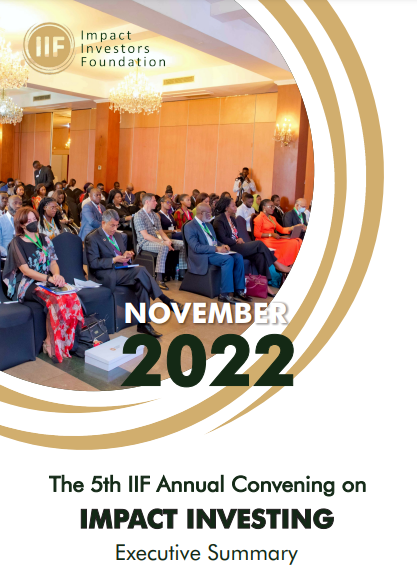
IIF 5th Annual Convening on Impact Investing report - Executive Summary
The 5th IIF Annual Convening came together against the pertinent background of the need for sustainable post-COVID socioeconomic recovery in the country and to drive massive impact investment on both sides of the spectrum. It was a two-day event on the 1st and 2nd of November 2022, held at the Oriental Hotel, Victoria Island, Lagos.
News Image
Unleashing Potential Through Impact Investing: Key Insights from the 2023 Africa Impact Summit

On July 13-14, 2023 in Cape Town, South Africa the Africa impact investing community hosted the maiden edition of the Africa Impact Summit, a groundbreaking event that brought together experts, investors, accelerators, and changemakers from across the Continent and beyond to discuss how to unleash Africa’s potential through impact investing.

News Image
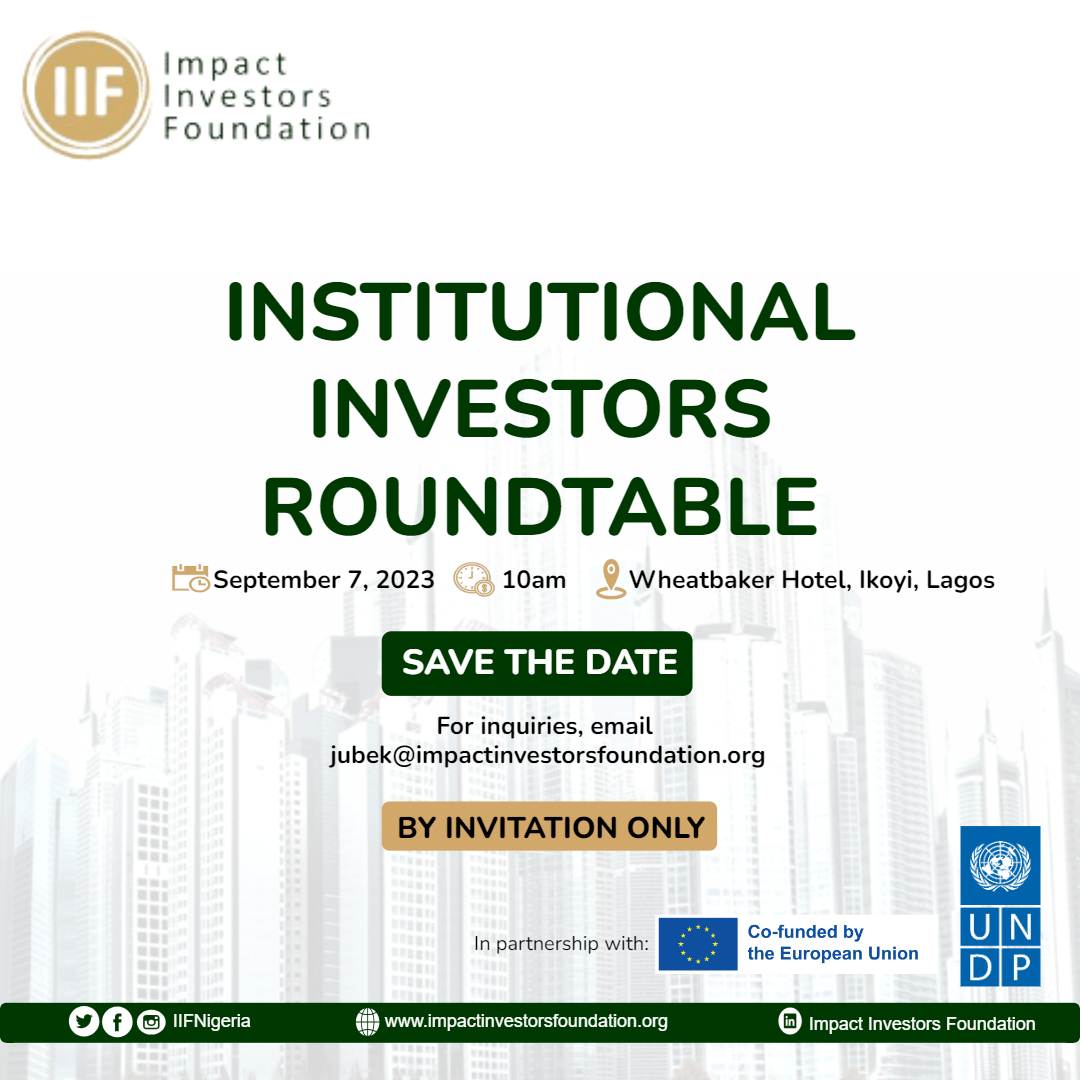
Institutional Investors Roundtable
Amidst global challenges of poverty and inequality, inclusive growth and development are urgently needed. Despite efforts, progress has been slow, leaving underserved communities and marginalised groups struggling. Limited access to essential services perpetuates poverty cycles and hampers development. Impact investing has the potential for positive change but has yet to reach its full impact in Nigeria. 
Catalytic capital, an investment approach on the impact capital spectrum, can overcome barriers and boost inclusive growth. It targets investments in crucial sectors like health, education, and renewable energy, among others, and ensures marginalised areas access essential services and opportunities. Catalytic capital also helps early-stage companies grow, attracts traditional investors, and leverages partnerships for maximum impact. In Nigeria, catalytic capital plays a vital role in bridging the SDG financing gap, but collaborations among stakeholders are crucial for its success. 
News Image
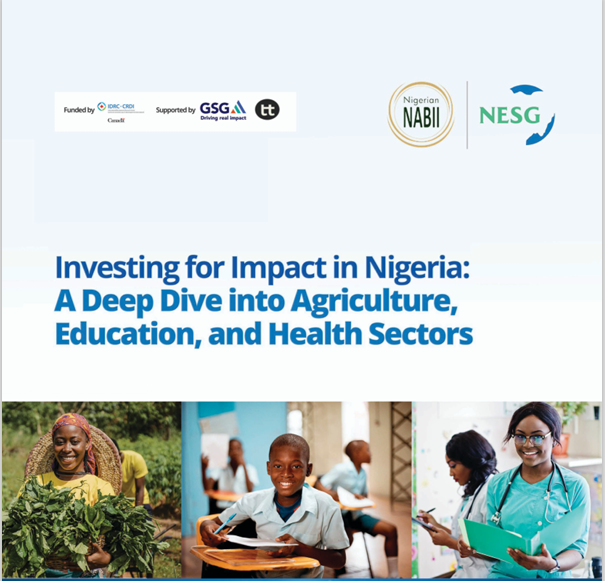
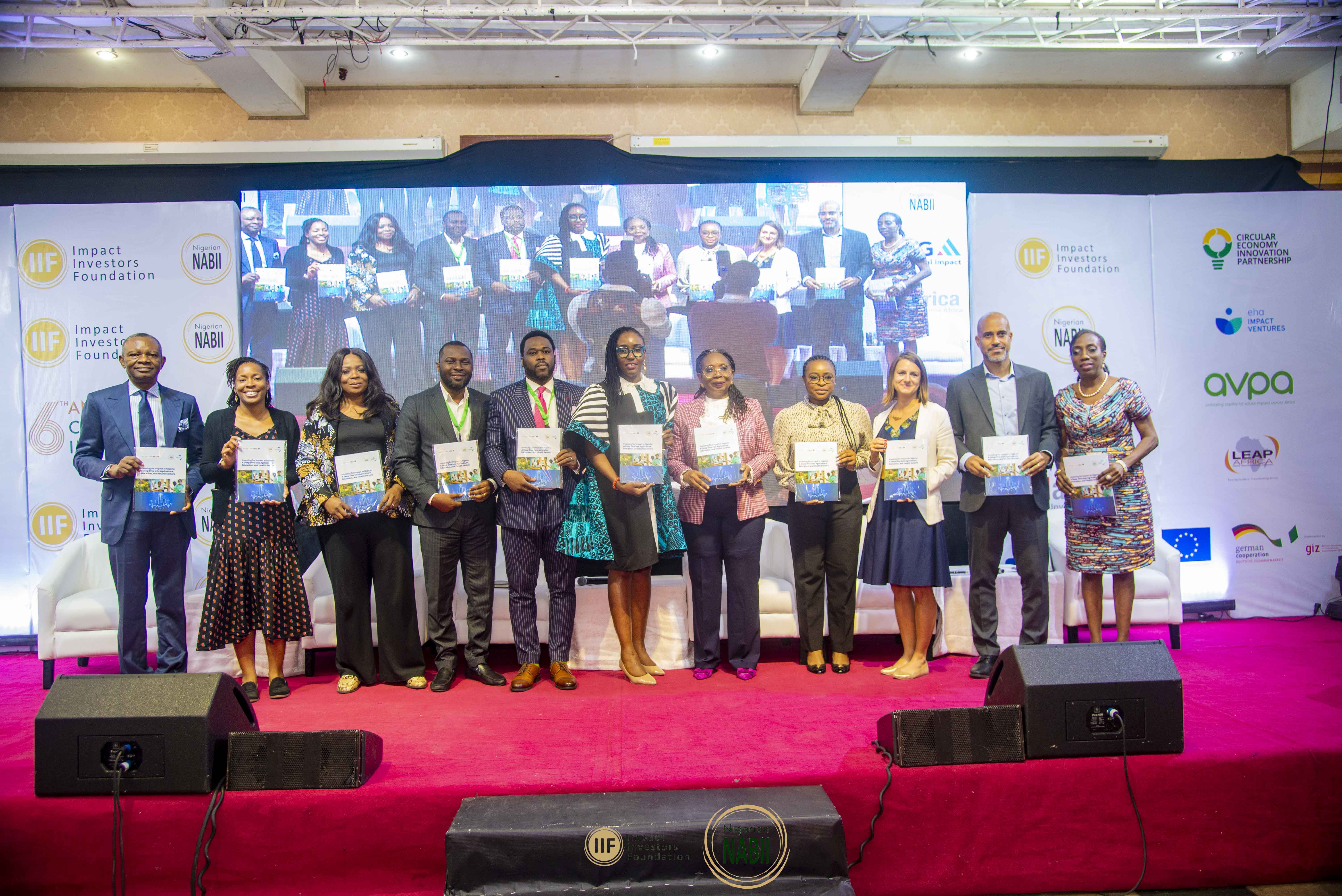
Investing for Impact in Nigeria: A Deep Dive into Agriculture, Education, and Health Sectors report

The Nigerian National Advisory Board for Impact Investing (NABII) has launched its report, “Investing for Impact in Nigeria: A Deep Dive into Agriculture, Education, and Health Sectors”. It reveals that the Nigerian financial market has limited capacity to cater to MSME funding demands such as equity funding, grants, low-cost debt financing and patient capital.

News Image
Scaling Catalytic Capital for Sustainable Economic Prosperity
This white paper, "Scaling Catalytic Capital for Sustainable Economic Prosperity," provides a comprehensive analysis of the role and potential of catalytic capital in Africa's economic development. Catalytic capital, a subset of impact investing, is crucial in filling the gaps left by mainstream financing, particularly for small and medium-sized enterprises (SMEs) and high-impact projects. This document explores the historical and conceptual framework of catalytic capital, highlights notable trends in its deployment across Africa, and presents key recommendations for stakeholders to enhance its effectiveness.
News Image
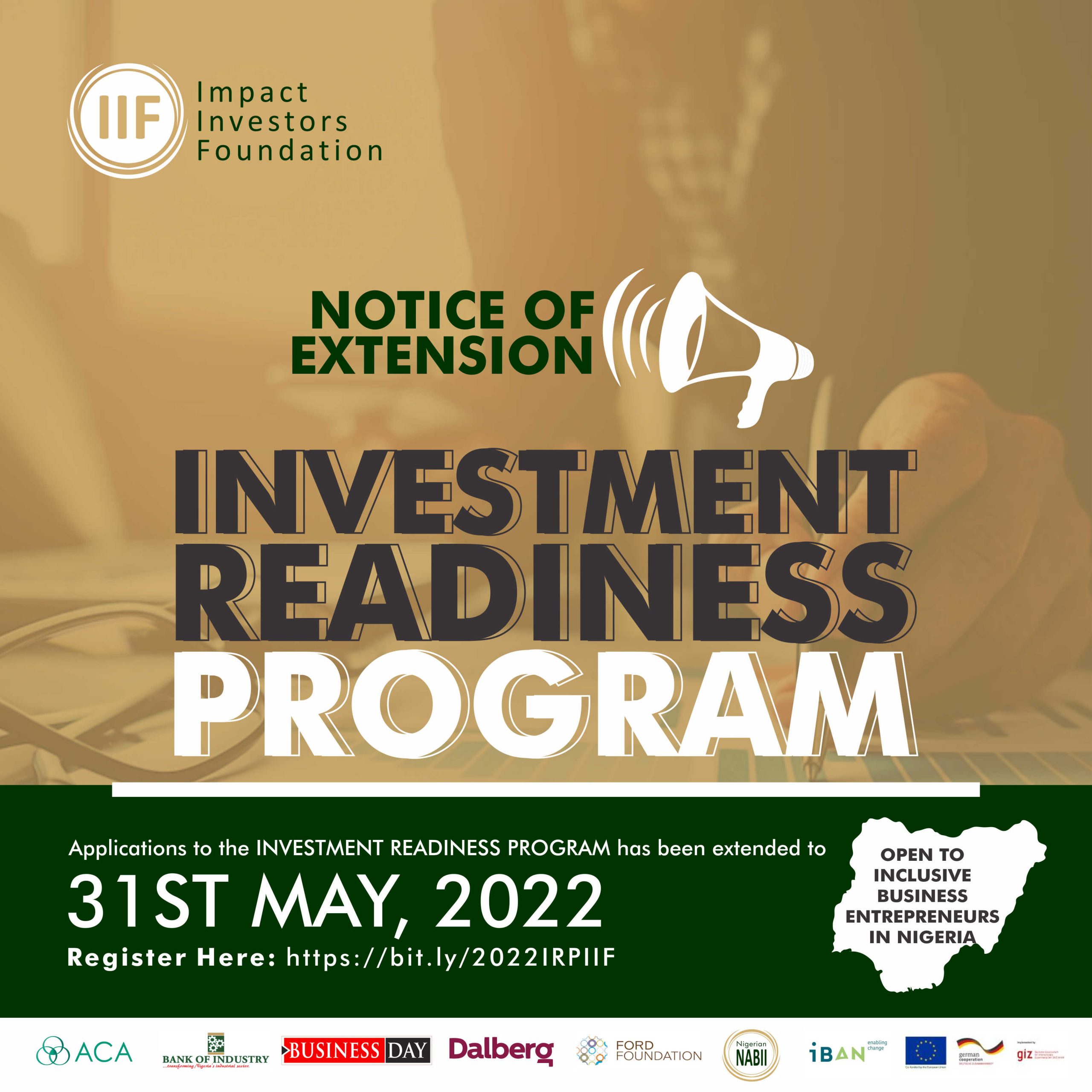
Investment Readiness Programme
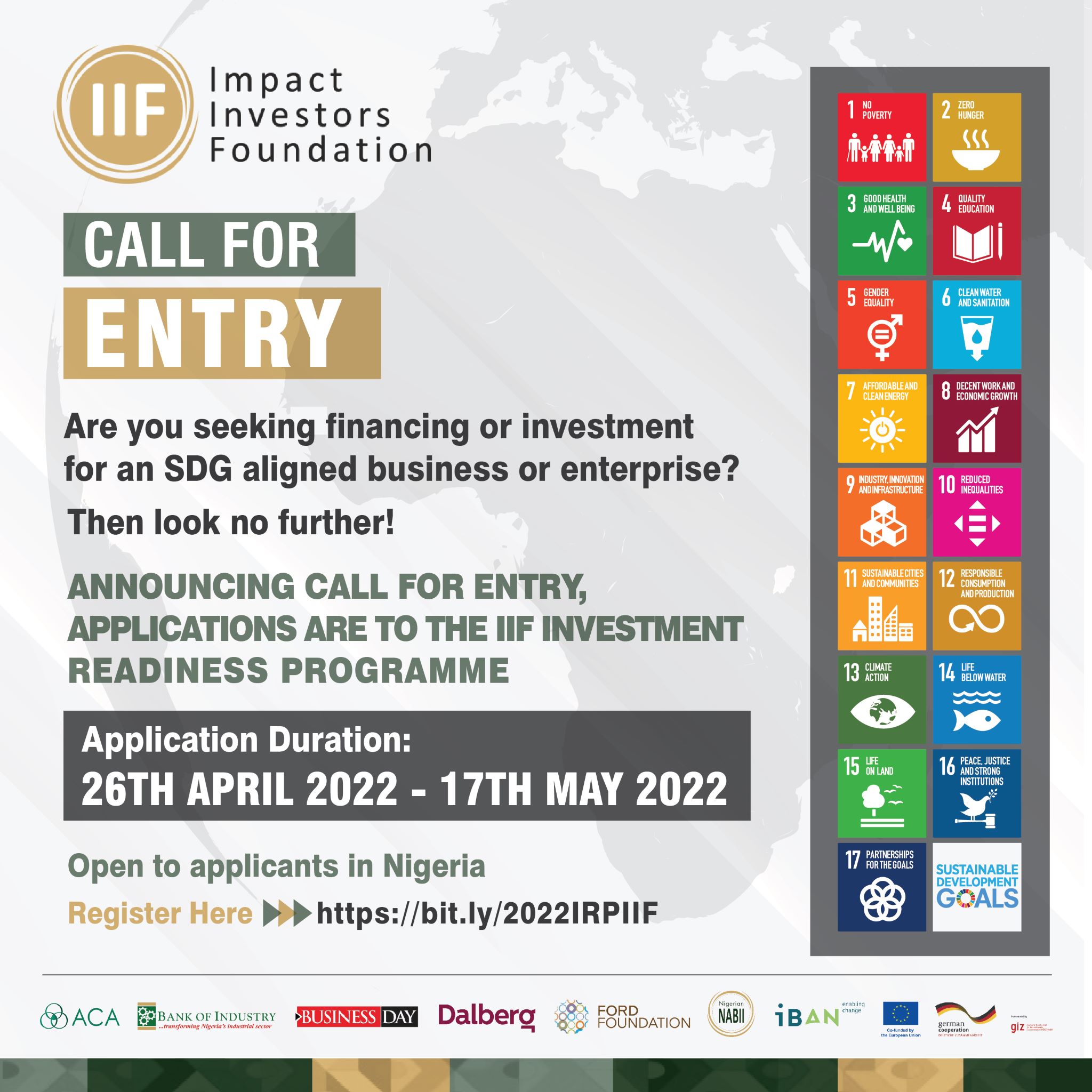
To address Africa’s socio-economic challenges both innovative entrepreneurs and new business models must emerge. We believe that the private sector will be at the forefront of finding solutions to the development needs of the continent through innovative financing and implementation approaches. IIF and iBAN support this vision by providing investment readiness and acceleration services to inclusive businesses companies who combine financial success with positive social change.
News Image
2nd Gender Impact Investment Summit to Underscore Financing Opportunities for Women-Led Investments
The Impact Investors Foundation (IIF), Nigeria’s leading platform for unlocking impact capital, is proud to announce the 2nd Gender Impact Investment Summit, an event dedicated to closing the gender financing gap by advocating for women-centric policies and promoting impact-driven investments.
News Image
IIF Appoints Aigbogun as Board Chairman; Welcomes Ishmael, Hassan to NABII

Lagos, Nigeria – January 21, 2025 – The Impact Investors Foundation (IIF) is proud to announce the appointment of Frank Aigbogun, Publisher of BusinessDay Media, as the new Chairman of the IIF Board of Trustees, following the retirement of the former Chairman, Engr. Afolabi Oladele. Under his leadership, IIF will deepen its influence in shaping the country's impact investment landscape, fostering collaboration among stakeholders, and championing innovative solutions that address Nigeria's most critical challenges.

Mr. Aigbogun brings several years of exceptional leadership, management, influence and significant contributions to advancing and promoting impact investing in the media space. He started his career as a journalist and later became the publisher of BusinessDay newspaper, which he co-founded in 2001. He began his journalism career at The Guardian newspaper and moved on to Vanguard newspaper where he rose to the position of editor of all the titles of the newspaper. He served for many years as the Lagos correspondent of the Associated Press, AP. Mr. Aigbogun holds a degree in Mass Communication and is an alumnus of the Lagos Business School. Mr. Aigbogun was a member of the Vision 2010, assigned by the government to formulate a long-term economic vision for Nigeria. Notably, he served as the alternate rapporteur for the sub-committee on competition and deregulation. He has also served on the governing board of Nigeria’s National Competitiveness Council.

Commenting on his appointment, Aigbogun, said, “This is an exciting opportunity to contribute to shaping the trajectory of impact investing at a time when investments that deliver meaningful and measurable change for Nigeria have become even more paramount. As one driven by continuous growth and innovation, I firmly believe that through collaborative efforts, we can achieve meaningful progress within our industry.”

The Nigerian National Advisory Board on Impact Investing (NABII), an advisory board under IIF, is equally delighted to welcome two prominent industry leaders. Tokunboh Ishmael, Managing Director and Co-Founder of Alitheia Capital, and Gbenga Hassan, Managing Partner at Argentil Capital, join NABII with their wealth of experience and expertise in Impact Investing, Gender Lens Investing, Fund Management, Venture Capital and Private Equity. As the Chair of IIF, Aigbogun also joined the NABII as Vice Chair of the Advisory Board. Their addition underscores NABII’s commitment to harnessing exceptional talent to accelerate the growth of Nigeria’s impact investment ecosystem.

Ishmael said, “Joining NABII provides a unique opportunity to contribute to the scaling of impactful solutions that address societal challenges while driving economic growth. I look forward to working with this dynamic team to advance our shared vision.”

Hassan added, “Impact investing holds the power to unlock Nigeria’s potential and create lasting value. I am excited to join NABII in its mission to mobilise capital and inspire action for sustainable development.”

Ishmael is a renowned advocate and pioneer of impact, fintech, and gender lens investing. Over the past two decades, she has been a leader in creating innovative financial solutions that address systemic inequalities to achieve inclusive and shared prosperity. As Manager Director and Co-Founder of Alitheia Capital, a female-led private equity firm that embodies the philosophy ‘profit with purpose’, she is a leader in the mainstreaming of impact investing within the private equity asset class. Ishmael also co-founded Alitheia IDF where she raised over $100 million, establishing the first and largest Gender Lens fund  to invest in female-led businesses across Africa. Some of the companies where she has invested are already changing and redefining their sector. Prior to founding Alitheia Capital, Ishmael worked at Salomon Brothers on Wall Street, New York, where she conducted over $5 billion in M&A transactions. She also previously led the establishment of the private equity firm, Aureos Capital, in West Africa and the development of Avante Capital where she led M&A activity for the Ocean and Oil group. Her extensive experience in fund management and investment strategy makes her an invaluable asset to NABII.

Hassan brings over two decades of leadership in venture capital, private equity, and financial services. As Managing Partner and co-founder at Argentil Capital, he has led transformative investments across sectors, driving sustainable growth and innovation. His expertise in structuring deals and managing portfolios will play a key role in advancing NABII’s objectives. He has led key investments including Sygen Pharmaceuticals and First Modular Gas Systems Limited and Àrgentil’s investments into two fund managers and early-stage investments. Previously, Gbenga was responsible for identifying, originating, and executing private equity transactions in West Africa at Aureos Capital, specialising in deal structuring, valuation, and portfolio management. He also worked with Standard Bank London and Stanbic Bank Nigeria in various corporate and project finance roles.

Etemore Glover, CEO of Impact Investors Foundation, said, “Given the new board members' impressive careers championing sustainable investment and driving transformative change, I am confident that their diverse and extensive skillsets, combined with their vast experience in industry will play a pivotal role in helping to steer the direction of the foundation.”

Under the guidance of Aigbogun and with the strategic expertise of Ishmael and Hassan, IIF and NABII are well-positioned to drive impactful investments, foster economic empowerment, and promote sustainable development in Nigeria. These appointments reflect a shared commitment to shaping a thriving impact economy and unlocking new opportunities for growth and resilience.

About the Impact Investors Foundation (IIF)

The Impact Investors Foundation (IIF) engages and collaborates with key stakeholders, active in the impact investing space, to unlock private capital for social investments in Nigeria. IIF’s overarching goal is to promote the growth and excellence of impact investing in Nigeria. In the last 5 years, IIF has been playing a leading role in the impact investing ecosystem in Nigeria by convening stakeholders in government, private and social sectors to advance its growth. In furtherance of its effort to accelerate the market potential, the IIF established the Nigerian National Advisory Board for Impact Investing (NABII), . The role of the NABII is to design and implement national strategies, regulations and policies that address the barriers inhibiting the growth of impact investing while unlocking opportunities for more impactful investments. Visit www.impactinvestorsfoundation.org to learn more.

News Image
Appealing to Impact Investors: Key Requirements for Social Enterprises

Discover the essential criteria impact investors look for when considering funding opportunities for social enterprises


Understanding Impact Investing

The investment landscape has undergone changes over the years with more investors being intentional about making a positive change with their investments. This category of investors are committed to making a difference in the world while seeking financial gains. They prioritise sustainable business models that demonstrate social and environmental impact in their mission. The business models they consider address the world’s most pressing challenges such as poverty, inequality, climate change, access to quality education, food, clean water and healthcare just to mention a few.

To appeal to impact investors, social enterprises need to understand the fundamentals of impact investing and how it aligns with their business goals. This includes being aware of the various impact themes and sectors investors are interested in, such as climate adaptation, renewable energy, sustainable agriculture, education, healthcare, and more. 


Key Business Structures for Impact Investment

When it comes to impact investment, several business structures are particularly attractive to investors. Entrepreneurs should consider structuring their businesses in a way that aligns with these models to attract impact investors.

These include:

  • Social enterprises: These are businesses with a social or environmental mission at their core. They aim to generate both social impact and financial returns.

  • Inclusive businesses: These are commercially-viable business lines deliberately designed to achieve social impact among the base of the pyramid. Such companies are typically highly innovative, highly productive, achieve good returns and are mostly medium to large-sized firms.

  • B Corps: B Corps are for-profit companies that are certified to meet rigorous standards of social and environmental performance, accountability, and transparency.

  • Non-profit organisations: While impact investing is often associated with for-profit ventures, non-profit organisations can also benefit from impact investment funding. They need to demonstrate a sustainable business model and a clear path to creating social impact.


Meeting Social and Environmental Criteria

One of the key criteria impact investors look for is a strong commitment to social and environmental impact. Entrepreneurs need to have a clear business model that demonstrates the intention to address critical social or environmental challenges. It is also important to have a business plan that explains the business objective, the change it aims to create and plans for generating revenue.

This includes having a well-defined mission statement that articulates the social and/or environmental problem the business aims to solve, as well as measurable goals and impact metrics. Entrepreneurs should also consider how their businesses can contribute to the United Nations Sustainable Development Goals (SDGs). For instance, Eja-Ice is addressing the poor cold chain infrastructure in Africa’s food systems caused by inconsistent power supply from the national grid by producing solar-powered refrigeration and cold chain services. This is solving the cold chain problem, for families, retailers, food producers and corporations in Africa while meeting that SDG 7 – Affordable and Clean Energy, Goal 13 – Climate Action, and Goal 3 – Good Health and Well-being. 


Furthermore, impact investors often prioritise businesses with a strong track record of stakeholder engagement, diversity and inclusion, and ethical practices. Entrepreneurs need to showcase their commitment to these values. One way HelpMum, a social enterprise in Nigeria, is showcasing its commitment to these values is by addressing high maternal and infant mortality rates in remote rural areas in Nigeria by deploying innovation that bridges the healthcare knowledge gaps, improve immunisation of children by 45%, helped 15,417 pregnant women have safe delivery and equipped 2,165 birth attendants and health workers with e-learning tools  while working with the relevant stakeholders and the government. 


Financial Performance Considerations

While impact investors are driven by the desire to create positive change, they also expect a  financial return on their investments. Enterprises should demonstrate that their businesses have solid financial performance and growth potential.

This includes providing a clear business plan, financial projections, and evidence of revenue generation. They should also demonstrate how their businesses can achieve financial sustainability without relying solely on impact investment funding. They should note that impact investors’ expected returns range from below market or concessionary rates to risk-adjusted market rates.


Developing an Impact Measurement Methodology

Additionally, impact investors appreciate businesses that have a robust impact measurement, management and reporting system in place.  Entrepreneurs must be able to monitor and report to investors on the social and environmental outcomes of their companies. This captures the actual changes that stakeholders are experiencing, going beyond typical indicators. Accurate impact measurement and management provides valuable information that can guide strategic decisions.  High-quality data is necessary for accurate impact measurement and management. Key actions to be taken include putting in place reliable data collection techniques and routinely assessing the quality of the data.


Reporting Social and Environmental Performance and Progress

Traditional methods focus on numbers such as the number of stakeholders reached or the percentage improvement in stakeholder behaviour but fail to capture the voices and experiences of stakeholders. Both qualitative and quantitative reporting are crucial for impact reporting. Examples of qualitative data may be case studies, interviews, and testimonies that give a story behind the data and show the actual changes that stakeholders have gone through.

When the influence of the business is communicated effectively, it guarantees that all parties involved comprehend and appreciate the impact, opening up opportunities for continuous support and collaboration.


Building Relationships with Impact Investors

Building strong relationships with impact investors is crucial for enterprises  seeking funding. It is important to understand the investor's values and impact priorities and tailor the business pitch accordingly. A resource that identifies impact funders in healthcare, agriculture, education in Nigeria, such as this IIF report, may be helpful as you fundraise to scale your social enterprise.  

Entrepreneurs should engage with impact investors through networking events, conferences, and online platforms. They should also leverage their existing networks and seek introductions to impact investors through mentors, advisors, and industry associations. An industry gathering such as the Annual Convening for Impact Investment and the West Africa Deal Summit 2024 is a platform to establish these connections and foster relationships with local and international investors.

In conclusion, businesses that are able to meet these fundamental requirements would be better positioned to attract impact capital and can start their fundraising efforts by signing up to the Deal Source Africa, a  platform where they can connect to potential investors.

News Image
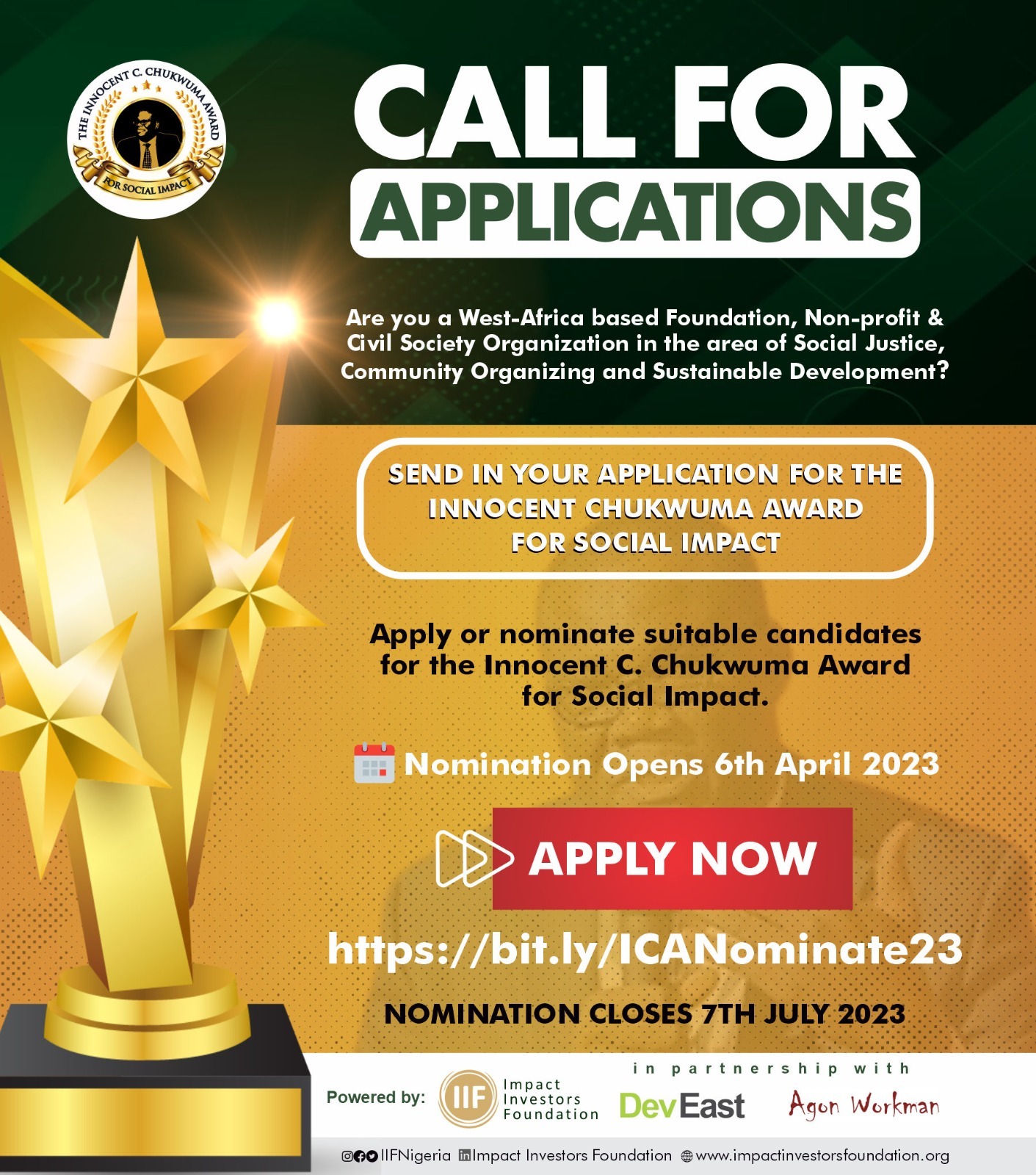
The Innocent C. Chukwuma Award for Social Impact (ICA) post-award reception
The Innocent C. Chukwuma Award for Social Impact (ICA) post-award reception was held in Lagos, Nigeria on April 6, 2023. The post-award which took place at The Capital Club, Victoria Island, Lagos, hosted experts and professionals in the social impact space in Nigeria, including the winner of the maiden edition of the Award; Mrs. Nkem Okocha, founder of Mamamoni Empowerment Foundation. 
News Image
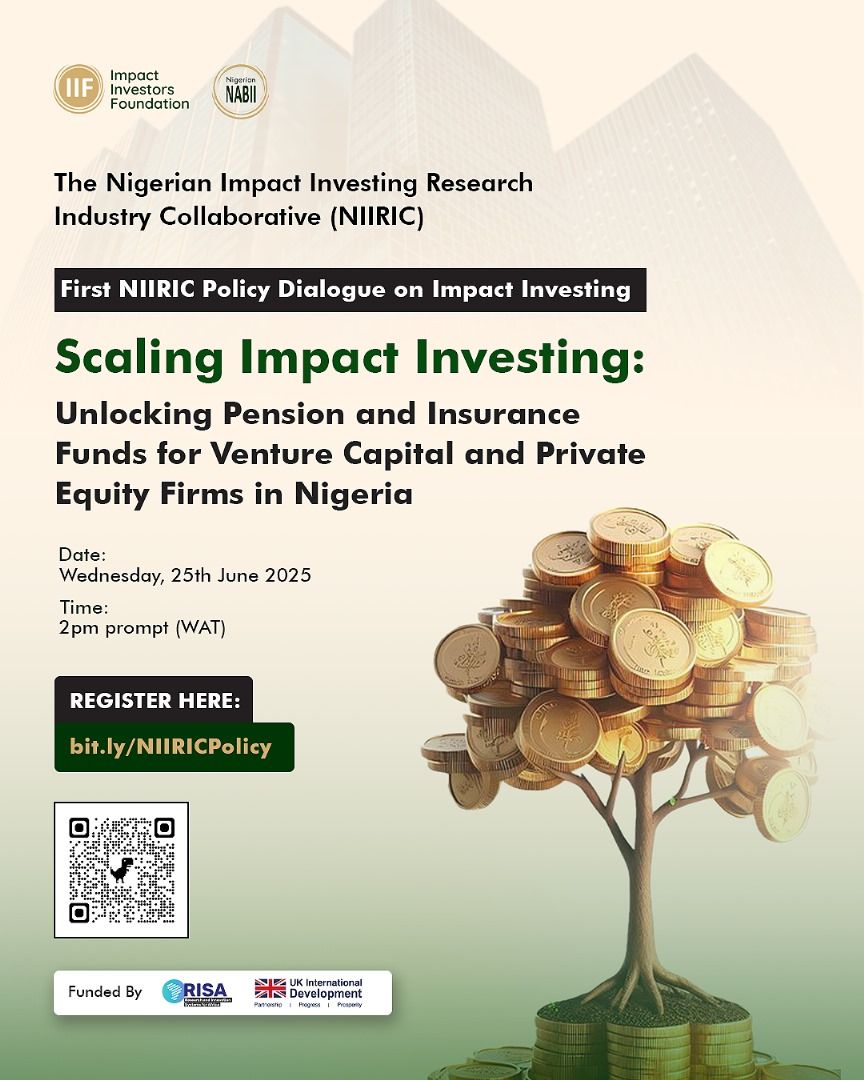
The 1st NIIRIC Policy Dialogue

The Nigeria Impact Investing Research and Industry Collaborative (NIIRIC) established in 2024 by GSG Nigeria Partner and steered by 10 leading organisations from the academia, research, industry and nonprofit will host its First NIIRIC Policy Dialogue on Impact Investing under the theme: Scaling Impact Investing: Unlocking Pension and Insurance Funds for Venture Capital and Private Equity Firms in Nigeria.

The NIIRIC policy dialogue on Impact Investing is a strategic event designed to address one of the most pressing challenges in Nigeria’s impact investing ecosystem: unlocking domestic institutional capital, specifically pension and insurance funds, for investment into high-impact sectors through venture capital and private equity.

Event Details

Date: Wednesday, 25th June 2025
Time: 2:00 PM WAT
Register: bit.ly/NIIRICPolicy

The dialogue will bring together key stakeholders across government, regulatory institutions, pension and insurance industries, private equity/venture capital firms, development finance institutions, and ecosystem enablers. The objective is to examine current policy and regulatory constraints, share global and regional best practices, and explore innovative financing models and strategic pathways that can de-risk and enable institutional investments in support of Nigeria’s sustainable development goals.


News Image
Join us for Corporate Philanthropy Webinar

Join us live for the Corporate Philanthropy Webinar and be inspired and challenged by meaningful conversations on philanthropy and impact investing.

News Image
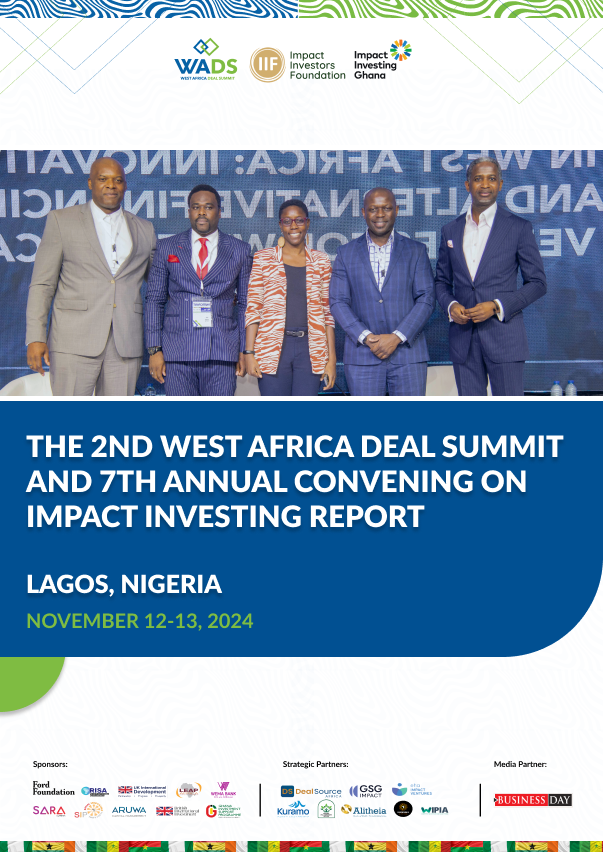
Unlocking Catalytic Capital: Key Insights from the 2024 West Africa Deal Summit

The path to sustainable economic development in West Africa requires innovative financing approaches and strategic partnerships. The recently concluded 2nd West Africa Deal Summit 2024 and 7th Annual Convening on Impact Investing brought these critical conversations to the forefront, offering actionable insights for stakeholders across the investment ecosystem.

Bridging the $331 Billion Capital Gap

Held on November 12-13, 2024, at the Civic Centre in Lagos, this landmark event convened policymakers, investors, entrepreneurs, and development practitioners from across the region. The summit addressed one of West Africa's most pressing challenges: the $331 billion capital gap that continues to constrain SME growth, job creation, and sustainable development.

Hosted by Impact Investors Foundation and Impact Investing Ghana, in collaboration with Impact Investing Taskforces from Senegal, Burkina Faso, and Côte d'Ivoire, the summit featured 32 interactive sessions exploring impact investing, sustainable financing, cross-border collaboration, gender-responsive procurement, and climate adaptation initiatives.

Key Challenges and Opportunities

The discussions revealed several persistent challenges facing the region:

  • Limited access to long-term financing for impact-driven enterprises
  • Regulatory and policy barriers that impede cross-border investment flows
  • Inadequate frameworks for impact measurement and reporting

However, the summit also highlighted emerging opportunities:

  • Growing investor interest in sovereign and corporate SDG bonds
  • Potential mobilisation of pension funds for impact investments
  • Development of innovative financing models tailored to local contexts

Charting a Path Forward

The summit produced eight key recommendations to accelerate the flow of catalytic capital in West Africa:

  1. Develop cohesive national and regional frameworks to support catalytic capital flows
  2. Strengthen public-private partnerships to mobilize both domestic and international capital
  3. Enhance capacity-building initiatives for SMEs and impact-driven enterprises
  4. Establish platforms for transparent impact measurement and reporting
  5. Promote gender-responsive procurement and support for women-led enterprises
  6. Encourage innovative financing structures to de-risk investments
  7. Expand access to climate adaptation financing
  8. Foster innovation in investment structures to attract diverse funding sources
News Image
African Impact Summit 2023
The leading Impact Investing Forum in the Continent of Africa is officially launched.

Are you a policymaker, early-stage business and enterprise, fund manager, institutional investor, development finance institution, government, international organisations, and individual committed to positive impact, this Summit will have something to offer you.
News Image
Impact Taskforce highlights urgent need for DFIs to mobilise more private sector capital in low-income countries
The Impact Taskforce (ITF), the independent, industry-led taskforce supported by the UK G7 Presidency releases State of Play 2023. The update assesses the progress made since the Taskforce made its first recommendations in the 2021 flagship report Time to Deliver
News Image
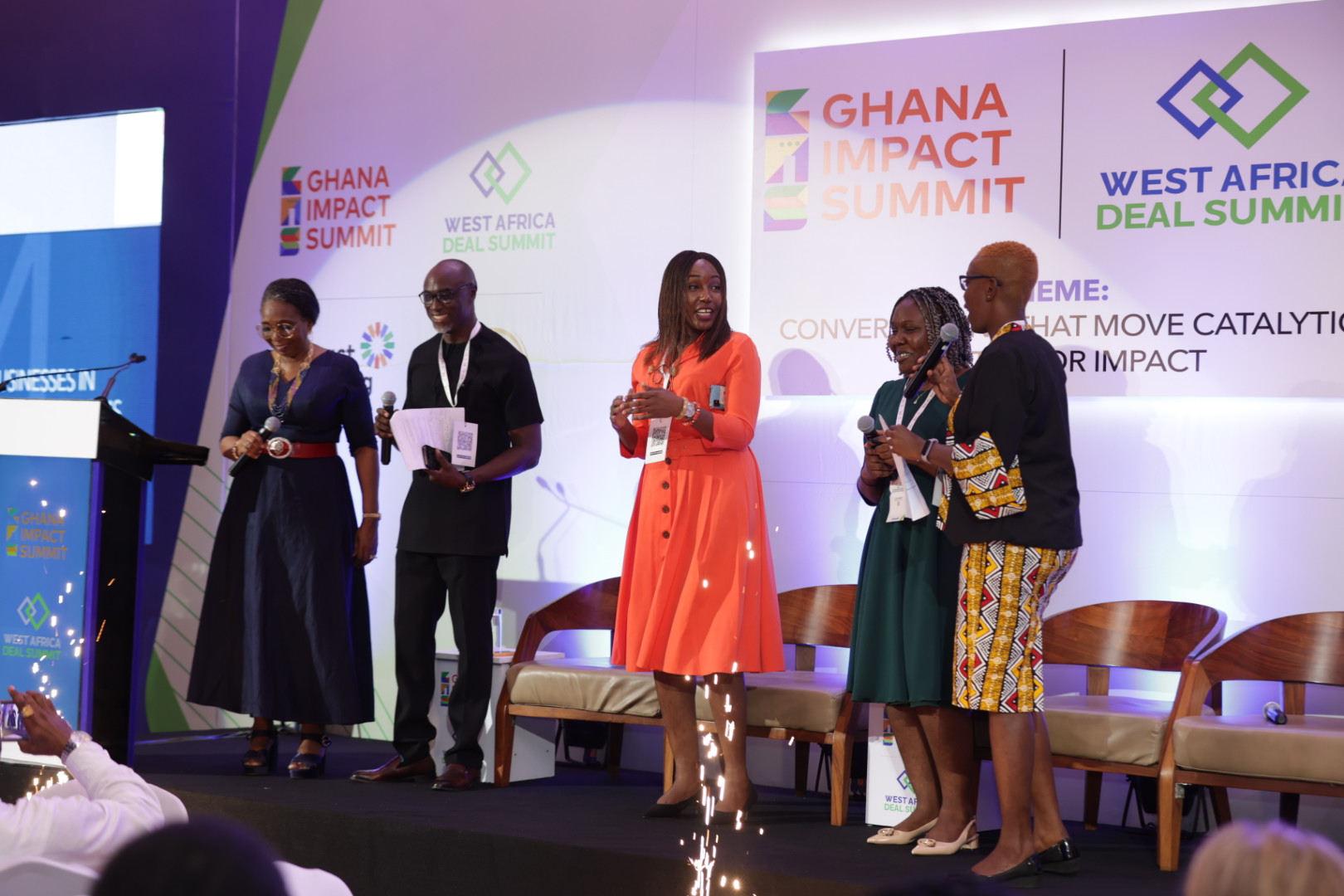
First West Africa Deal Summit and the Second Ghana Impact Summit
The first West Africa Deal Summit and the second Ghana Impact Summit are officially launched!
The summit will bring together 350 industry stakeholders - catalytic capital providers, funds,
businesses, enterprise support organizations, and other market builders from across West Africa to
attend in person and virtually.
News Image
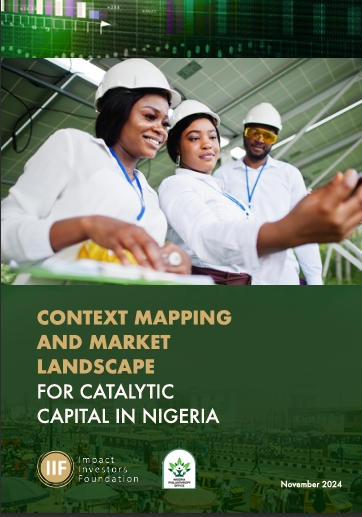
CONTEXT MAPPING AND MARKET LANDSCAPE FOR CATALYTIC CAPITAL IN NIGERIA - DOWNLOAD REPORT

The newly launched report, "CONTEXT MAPPING AND MARKET LANDSCAPE FOR CATALYTIC CAPITAL IN NIGERIA" , is a groundbreaking resource designed to accelerate the growth of the impact investing ecosystem in Nigeria. Developed by the Impact Investors Foundation and the Nigeria Philanthropy Office, this report explores how catalytic capital can bridge financing gaps for Micro, Small, and Medium Enterprises (MSMEs)—a sector that employs over 80% of Nigeria's workforce and plays a vital role in the economy.


Why You Should Download the Report

This report is a must-read for anyone passionate about driving sustainable development and economic transformation in Nigeria. Here’s why:

  1. Bridging Financing Gaps: The report addresses the $158.1 billion MSME financing gap, showcasing how catalytic capital can unlock investments for underserved businesses.
  2. Actionable Insights: It provides practical recommendations for policymakers, investors, and enterprise support organizations to drive sustainable growth.
  3. Real-Life Case Studies: Learn from successful applications of catalytic capital, featuring organizations like the Ford Foundation, Lagos State Employment Trust Fund, and the Tony Elumelu Foundation.
  4. Comprehensive Research: With data gathered through surveys, focus groups, and interviews, the report offers a well-rounded view of Nigeria’s catalytic capital landscape.
  5. Roadmap for Collaboration: Discover strategies for mobilizing public and private capital to drive innovation, sustainability, and economic growth in Nigeria.

Key Objectives of the Report

  • Understand the Landscape: Map the organizations deploying catalytic capital in Nigeria and analyze the types of investments and their impact.
  • Identify Challenges: Highlight the barriers to deploying catalytic capital and provide actionable solutions.
  • Foster Innovation: Offer insights into innovative financing models to support MSMEs and attract third-party investments.
  • Empower Stakeholders: Provide tailored recommendations for policymakers, investors, and market builders to strengthen Nigeria’s impact investing ecosystem.

Highlights from the Report

Catalytic capital, as highlighted in the report, is a transformative tool that takes on higher risks and lower returns to unlock investments in sectors that traditional financing methods often overlook. This form of capital is crucial for:

  • De-risking innovative ventures.
  • Enabling third-party investments in underserved markets.
  • Addressing Nigeria’s financing gaps while driving sustainable development.
News Image
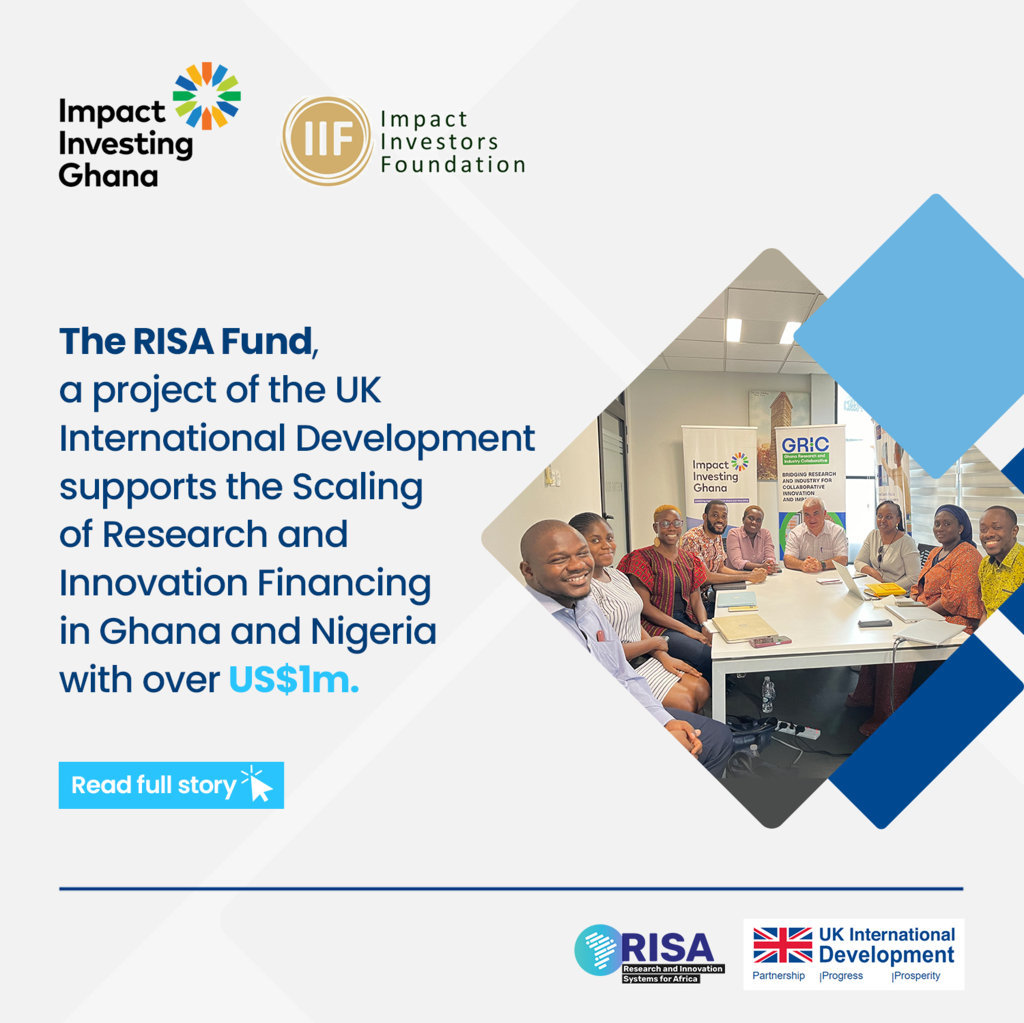
The RISA Fund, a project of the UK International Development supports the Scaling of Research & Innovation Financing in Ghana and Nigeria with over US$1m

Impact Investing Ghana (IIGh) and Impact Investors Foundation (IIF) Nigeria, have received a US$545,256 additional grant funding from The Research and Innovation Systems for Africa (RISA) Fund to scale sustainable systems for enterprise and innovation financing across Ghana and Nigeria through the Deal Source Africa and Enterprise Support Organisation programs as part of the second phase of RISA Fund’s Scaling Systems for Research & Innovation Financing (SSRIF II). This brings the total grants from the RISA Fund to Impact Investing Ghana to US$1,079,602.

News Image
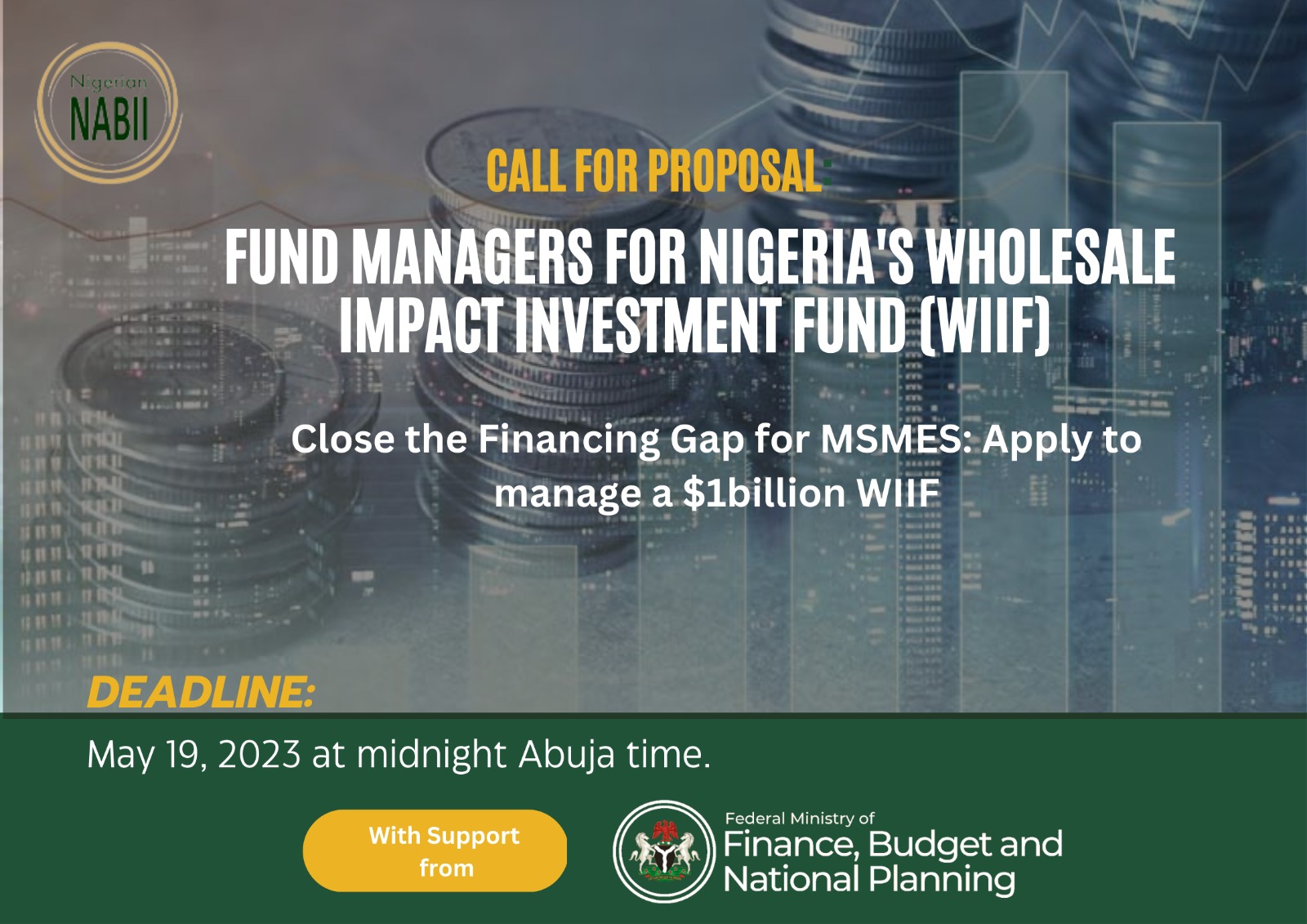
Call For Proposal: Fund Managers for Nigeria's Wholesale Impact Investment Fund (WIIF)

The Federal Ministry of Finance, Budget and National Planning, in partnership with the National Advisory Board on Impact Investing (NABII), is calling on interested fund managers or consortium of fund managers to submit applications for the management of a $1 billion (naira-denominated) Wholesale Impact Investment Fund (WIIF).


The $1 billion Wholesale Impact Investment Fund was established to address the critical financing gap faced by Nigeria's micro, small and medium-scale enterprises. 


News Image
Impact Investing Stakeholders Identify Transformative Role of Catalytic Capital in Nigeria

NABII launches report that reveals the Nigeria market  financing  gaps  for MSMEs


November 1, 2023, Lagos, Nigeria: Government officials, investors, global leaders, ecosystem builders, and development agencies in the impact investing ecosystem have outlined the transformative role catalytic capital could play in driving socioeconomic and inclusive growth in Nigeria.

News Image
When Two Rivers Cross: Impact Investing and Philanthropy in Nigeria
This report is the result of a study conducted by the Cambridge Centre for Strategic Philanthropy (CSP) in collaboration with SME.NG and the Impact Investors Foundation (IIF), which examined social entrepreneurs and their experience with impact investing and philanthropy. The report focuses on how impact investing can serve as an alternative funding source to traditional grants or finance models. Illustrating findings from 750+ Nigerian entrepreneurs, with emphasis on 50+ social entrepreneurs that have specific experience with impact investments, the report finds considerable space for impact investing to grow in the local Nigerian ecosystem.
News Image
The Nigerian NABII recommends policy and incentives for impact investing
The Nigerian National Advisory Board for Impact Investing (NABII) in partnership with the Nigerian Economic Summit Group (NESG) held a stakeholder validation workshop on Investing for Impact in Nigeria: A deep dive into Agriculture, Education and Health Sectors, which recommended strong regulations and incentives for impact investing products and funds.
News Image
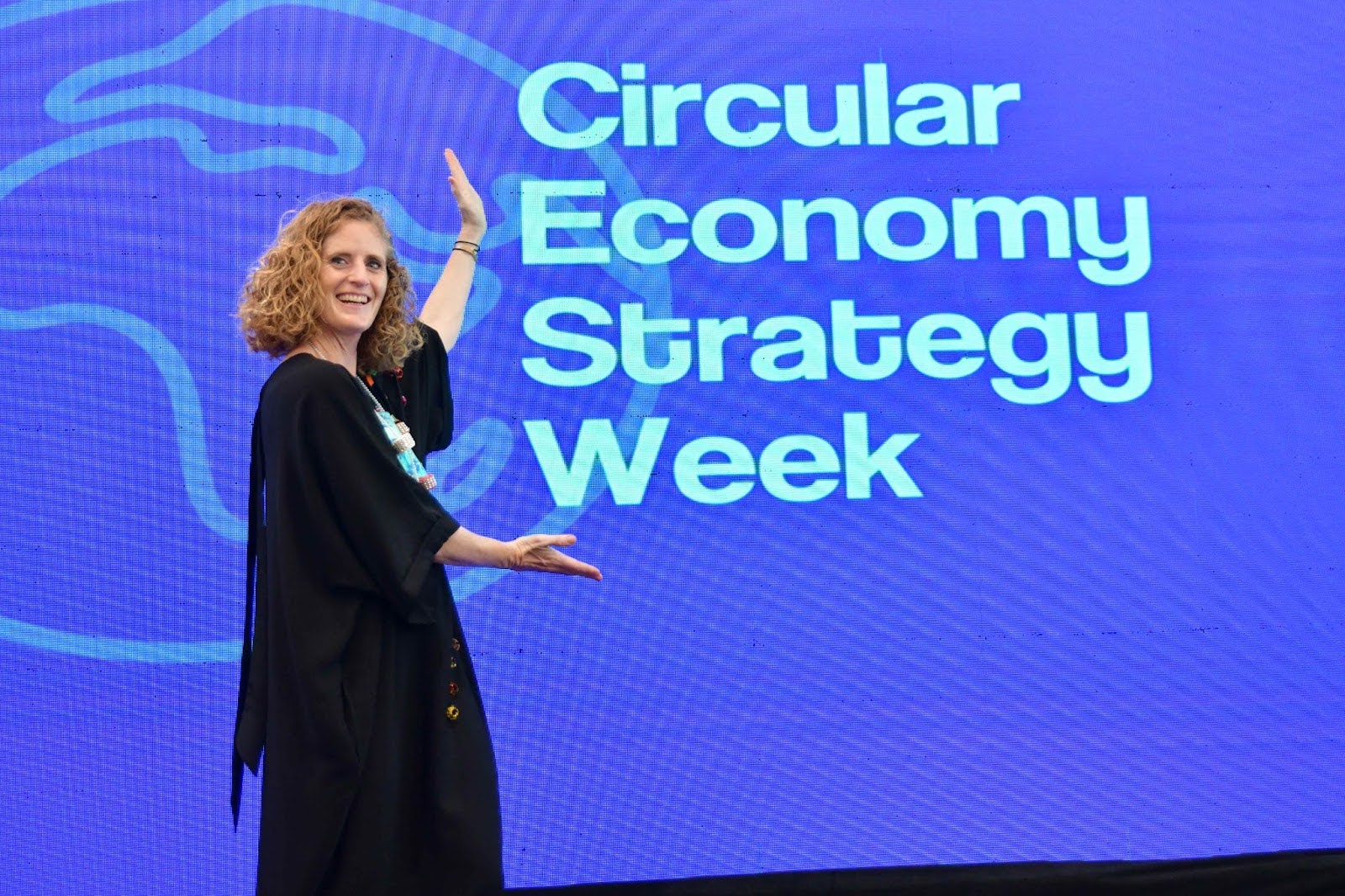
A Week of Immersion in Circular Solutions for Nigerian Agriculture: Takeaways from the CESW
From March 25-28, 2024, the bustling energy of Lagos served as a backdrop for almost a week of exploring innovative solutions for a more sustainable future. I had the privilege of participating in the Circular Economy Strategy Week (CESW) on behalf of the Impact Investors Foundation.
News Image
6th Annual Convening Synthesis Report
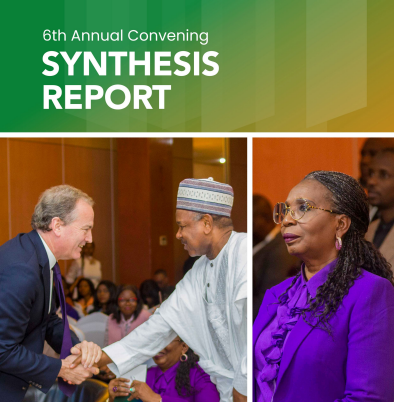
The 6th Annual Convening on Impact Investing held on October 31st and November 1st with the theme "Catalytic Capital for Inclusive Growth and Development." The event which was attended by 531 people online and in-person was a platform to showcase real-world case studies of catalytic capital deployment.
News Image
Deal Source Africa platform launched to bridge the funding gap for African businesses
Deal Source Africa, a comprehensive program to connect African businesses with investors and transaction advisors and African Impact Funds with investors,  officially  launched at the West Africa Deal Summit held in Accra on Wednesday, May 17, 2023.
News Image
From Advocacy to Action: Join the 3rd Gender Impact Investment Summit 2025

With the 1st and 2nd editions of the Summit geared towards bridging the financing gap through women-centric policy advocacy, and the promotion of gender inclusive models, this year's summit marks a significant paradigm shift from advocacy to tangible action with the launch of a comprehensive Gender/GESI Roadmap. This roadmap contains concrete strategic interventions designed to dismantle the barriers faced by women-led and owned businesses, youth, and People with Disabilities (PwDs).

Theme: Investing in Equity: Advancing Gender-Led Solutions for Inclusive Development

Date: July 16, 2025

Venue: Civic Centre, Victoria Island, Lagos

Register: https://gs.impactinvestorsfoundation.org/ 


News Image
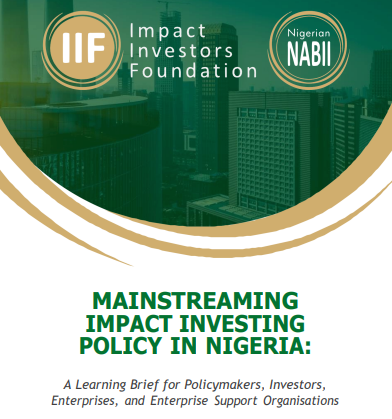
How to Mainstream Impact Investing Policies and Drive Transformative Change in Nigeria

“We need to start to talk about money in ways that dethrone it and make it subject to human ethics and standards of love and decency.” - Joel Solomon (author of The Clean Money Revolution).

As the world grapples with pressing social and environmental challenges, impact investing has emerged as a powerful tool for generating positive change while ensuring financial returns.


News Image
Impact Investors Foundation, GSG and FRC collaborate on the adoption of IFRS Sustainability Disclosure Standards in Nigeria

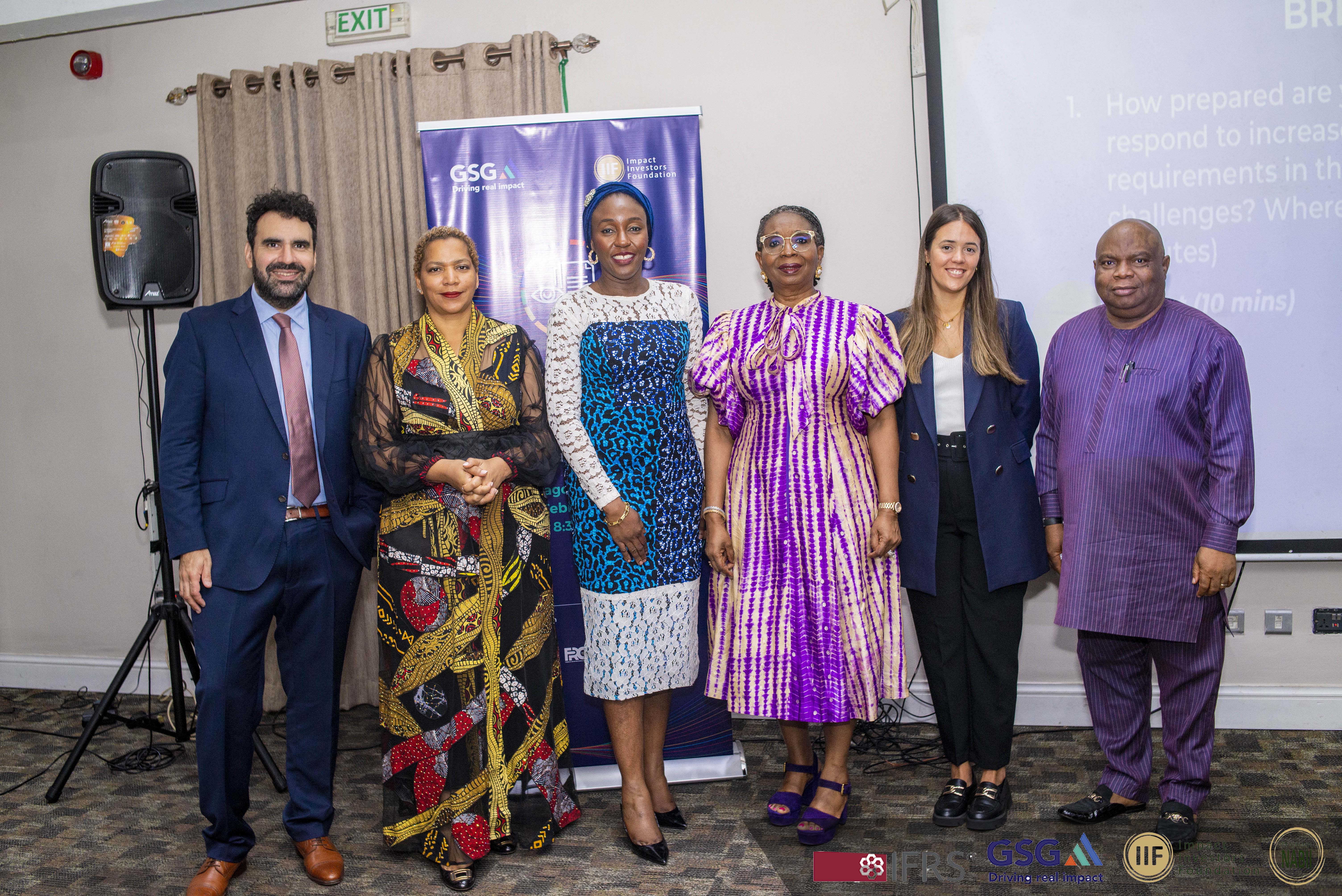
The Impact Investors Foundation (IIF) in collaboration with the Global Steering Group for Impact Investment (GSG) and the Financial Reporting Council of Nigeria (FRC) has boosted the capacity of over 100 MSMEs, financial and sustainability professionals in the public and private sectors in the IFRS International Sustainability Standards Board’s (ISSB) Sustainability Disclosure Standards.

News Image
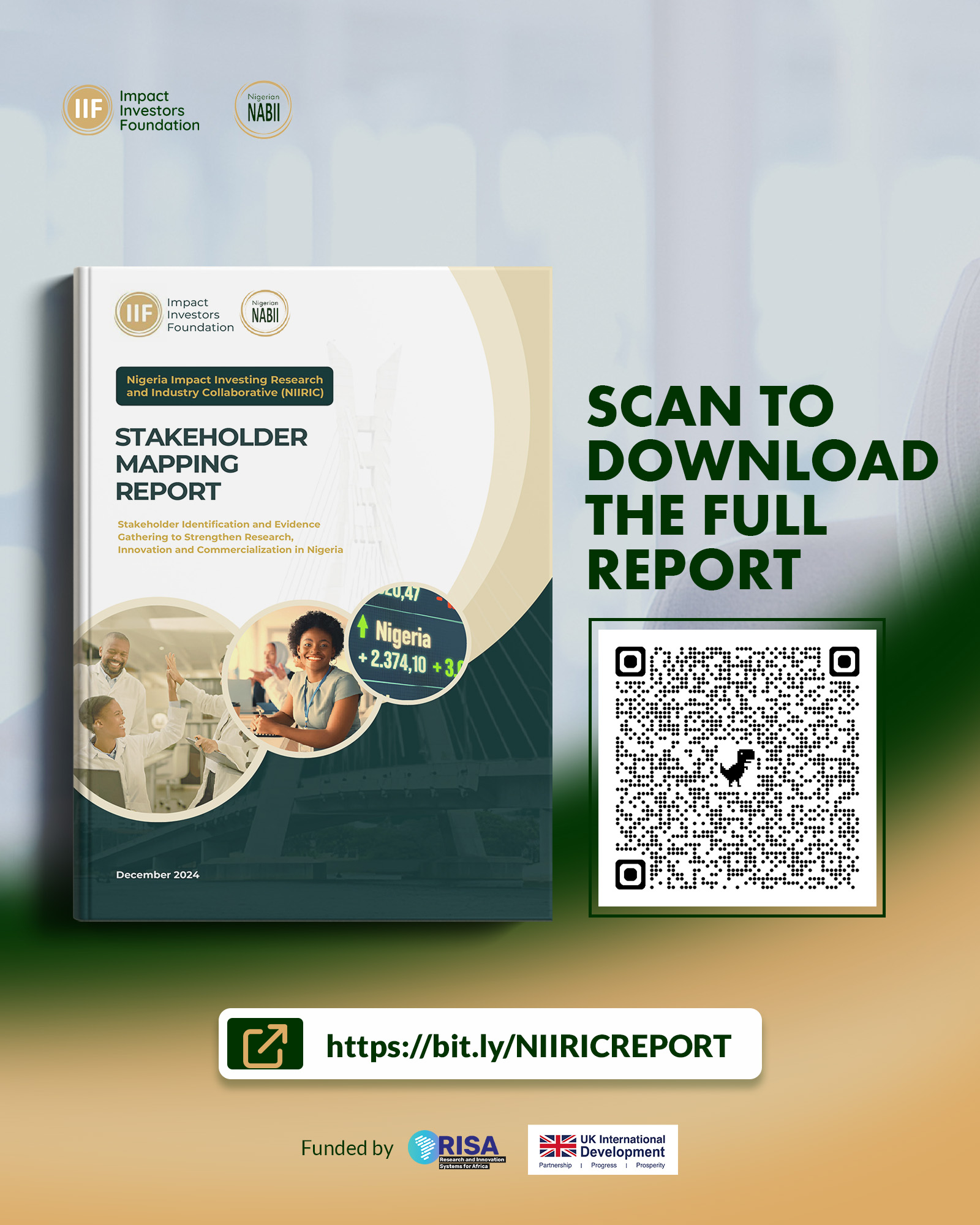
Unlock Nigeria’s Innovation Potential – Download the NIIRIC Stakeholder Mapping Report Today!

Nigeria stands at a critical juncture in its journey towards innovation-driven development. With a vast talent pool, emerging technology hubs, and increasing private sector engagement, the potential for impactful research and commercialisation has never been greater. However, persistent challenges, including fragmented collaboration, limited funding, and regulatory hurdles continue to slow progress.

The NIIRIC Stakeholder Mapping Report provides a deep dive into Nigeria’s research and innovation ecosystem, identifying key stakeholders, gaps, and actionable recommendations to drive collaboration, investment, and commercialization. If you are a policymaker, investor, entrepreneur, or researcher, this report is a must-read to understand and engage in shaping Nigeria’s innovation landscape.


What You’ll Learn

🔹 Key Challenges in Nigeria’s Innovation Ecosystem – Explore the barriers hindering the commercialization of research, including regulatory fragmentation, funding shortages, and weak academia-industry partnerships.

🔹 Opportunities for Strategic Collaboration – Identify how research institutions, industry leaders, and policymakers can work together to create a more efficient and impactful innovation environment.

🔹 Actionable Recommendations – Get insights into concrete steps for bridging gaps, such as strengthening public-private partnerships, enhancing funding mechanisms, and fostering commercialization pathways.

🔹 Case Studies of Successful Innovations – Learn from real-world examples of how targeted interventions have led to scalable and market-ready innovations.


Who Should Read This Report?

Investors & Venture Capitalists – Discover high-impact opportunities for funding research-driven businesses.
Policymakers & Regulators – Gain insights into policy frameworks that can drive sustainable innovation.
Entrepreneurs & Startups – Understand how to leverage partnerships and funding to scale your innovations.
Academics & Researchers – Learn how to align research outputs with industry needs for greater impact.

News Image
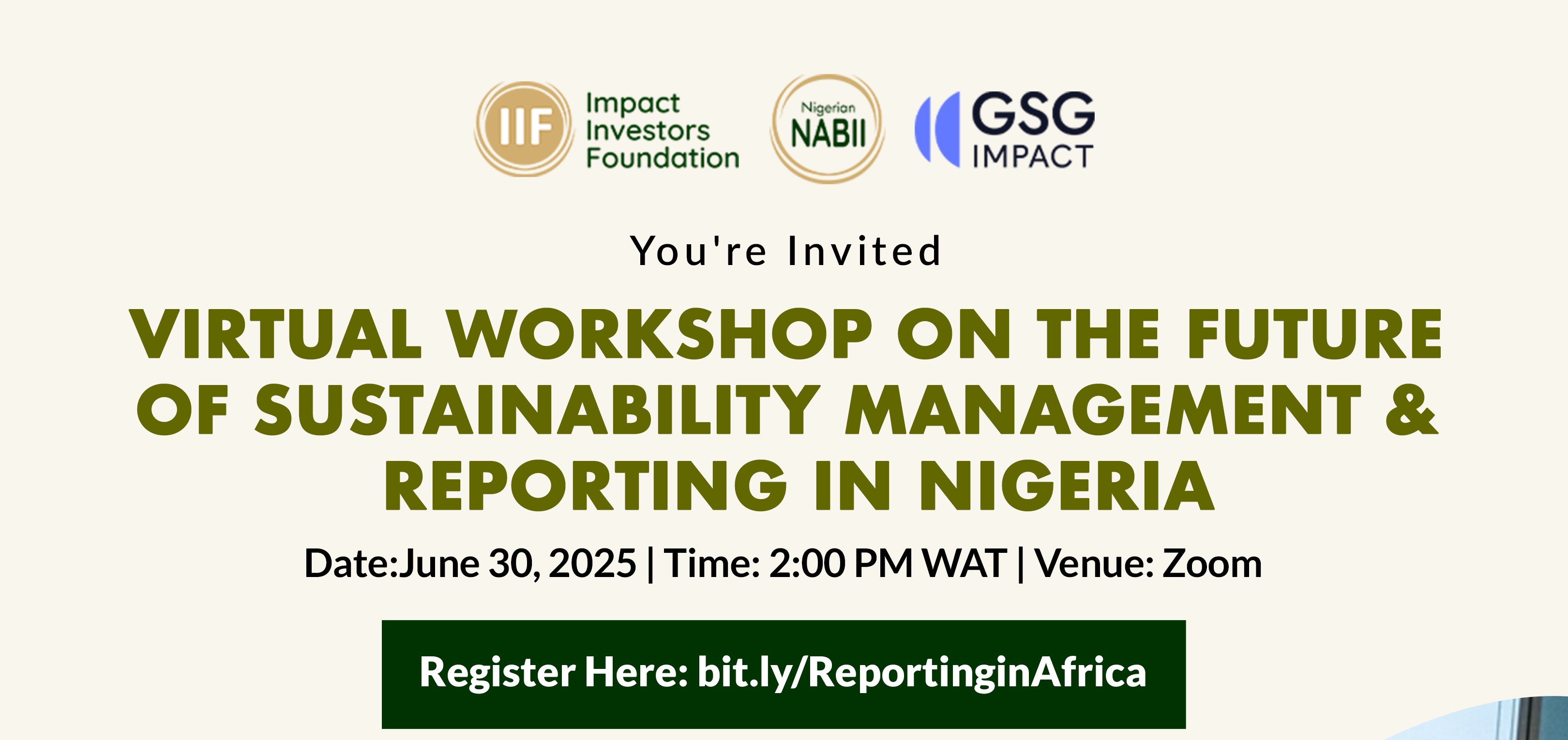
Virtual Workshop on the Future of Sustainability Management and Reporting

As global expectations and standards around transparency and sustainability continue to evolve, so also do the challenges facing companies of all sizes.

The Impact Investors Foundation (IIF), the Nigerian National Advisory Board for Impact Investing and GSG Impact, invite senior leaders across Nigeria to discuss and shape the future of sustainability management and reporting at a virtual to a virtual workshop. This session will bring together leaders from large corporations subject to impact and sustainability reporting requirements as well as SMEs working with these types of companies.

Together, participants will work to address a shared and pressing priority: how to make sustainability management and reporting work for all.

Workshop Details

Date: June 30, 2025

Time: 2 PM WAT

Duration: 90 minutes

Register: bit.ly/ReportinginAfrica


News Image
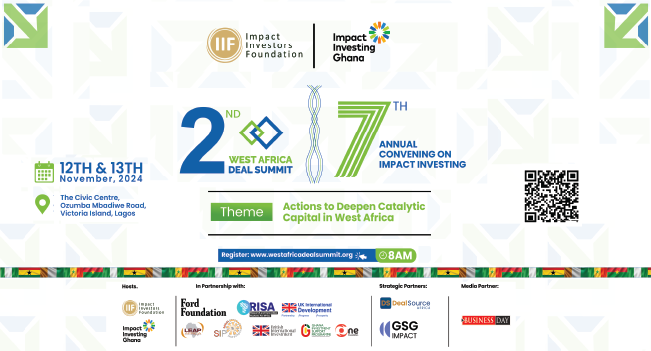
West Africa Deal Summit 2024 to Accelerate Catalytic Capital Deployment

The Impact Investors Foundation, Nigeria (IIF) and Impact Investing Ghana (IIGh) announce the return of the second edition of the West Africa Deal Summit 2024 (www.westafricadealsummit.org) scheduled  for 12th and 13th November 2024, at the Civic Centre, Lagos, Nigeria. The two-day summit is hosted  alongside Impact Investing Taskforces in Senegal, Burkina Faso and Cote d’Ivoire, under the theme "Actions to Deepen Catalytic Capital in West Africa," focusing on reviewing progress and commitments made towards deploying catalytic capital to grow SMEs across Africa. This follows the launch of the Catalytic Capital Africa (2CAfrica) campaign at the inaugural summit last year.

News Image
Catalytic Capital in Nigeria - Download Report

The Impact Investors Foundation (IIF) has released a groundbreaking report highlighting the transformative potential of catalytic capital in supporting Nigeria's Micro, Small, and Medium Enterprises (MSMEs). This report delves into the critical role that catalytic capital can play in enhancing growth and social impact within the MSME sector, a backbone of Nigeria's economy.

Despite their significance, MSMEs face considerable challenges, especially in securing financing that aligns with their needs. The IIF report not only sheds light on these issues but also synthesizes valuable insights from experts and case studies to present a blueprint for integrating catalytic capital into Nigeria’s economic development strategies.


Purpose of the Report

The report aims to:

  • Define catalytic capital and explain its importance within the Nigerian economic landscape.
  • Highlight the key challenges MSMEs face in accessing suitable financing.
  • Provide actionable recommendations for stakeholders—ranging from government to private sector entities and development finance institutions—to encourage the effective deployment of catalytic capital.

Key Findings

The report identifies several key insights:

  1. The Vital Role of MSMEs: Contributing significantly to Nigeria’s employment and GDP, MSMEs hold untapped potential due to limited access to finance.
  2. Catalytic Capital as a Tool for Impact Investing: A limited understanding of catalytic capital hinders its effective use in Nigeria, yet it represents a powerful form of impact investment.
  3. Regulatory Obstacles: Nigeria’s regulatory environment poses bureaucratic and cost-related challenges, which discourage the effective deployment of catalytic capital.
  4. Public-Private Partnerships (PPPs): Stronger collaborations between public and private sectors are essential for channeling catalytic capital toward infrastructure and other key sectors.

Ongoing Challenges

The report highlights persistent challenges that MSMEs and investors encounter, including:

  • Access to Finance: MSMEs face difficulty securing funds due to a lack of suitable financial products tailored to their needs.
  • Regulatory Hurdles: Complex regulations and bureaucratic processes deter many investors.
  • Limited Awareness: There is a widespread lack of understanding regarding catalytic capital among stakeholders, limiting its potential deployment.

Opportunities for Catalytic Capital

The report also identifies promising opportunities for strengthening Nigeria’s impact investment landscape, such as:

  • Developing a National Framework: Establishing a national policy on impact investing can incentivize catalytic capital through tax benefits and matching funds.
  • Enhancing Inter-Agency Collaborations: A government office dedicated to impact investing could drive policies that support catalytic capital across sectors.
  • Expanding Public-Private Partnerships: Strengthened PPPs can foster patient capital flows and help mitigate investment risks, especially in essential sectors like renewable energy, healthcare, and education.

Strategic Recommendations

To fully realize the potential of catalytic capital in Nigeria, the report presents the following key recommendations:

  1. Create a National Framework for Catalytic Capital: Simplifying regulations and providing incentives can foster a supportive environment for catalytic investments.
  2. Establish an Impact Investing Office: A dedicated government office would streamline coordination and drive cross-sector initiatives for catalytic capital.
  3. Encourage Public-Private Partnerships: PPPs offer a unique opportunity to address infrastructure and sustainability challenges through catalytic funding.
  4. Raise Awareness and Educate Stakeholders: Increasing understanding of catalytic capital’s benefits will boost its adoption and effectiveness.

Conclusion: A Path to Sustainable Growth

The report concludes that addressing MSME challenges and enhancing catalytic capital’s deployment are essential for Nigeria’s sustainable growth. By implementing the report’s recommendations, stakeholders can foster an environment where MSMEs thrive, ultimately strengthening Nigeria’s economy and creating a lasting positive impact on society.


News Image
Inaugural gender impact investment summit outlines immediate actions to bridge gender financing gap

The Impact Investors Foundation (IIF), Nigeria’s leading platform for unlocking impact capital, has successfully hosted the first Gender Impact Investment Summit on November 16, 2023, in Lagos.

News Image
Scalable Pathways for ESOs in Nigeria to Build MSME Investment Readiness Capacity

Nigeria’s MSMEs are the backbone of our economy, but are they truly investment-ready?


Many MSMEs struggle to secure funding, not because they lack potential, but because they lack the right investment readiness support. Ecosystem Support Organizations (ESOs) play a critical role in bridging this gap, but how can we scale their impact effectively?

News Image
Africa Impact Summit

The Africa Impact Summit is the leading forum that is driving networking, deal-making and impact investing thought leadership in Africa.

News Image
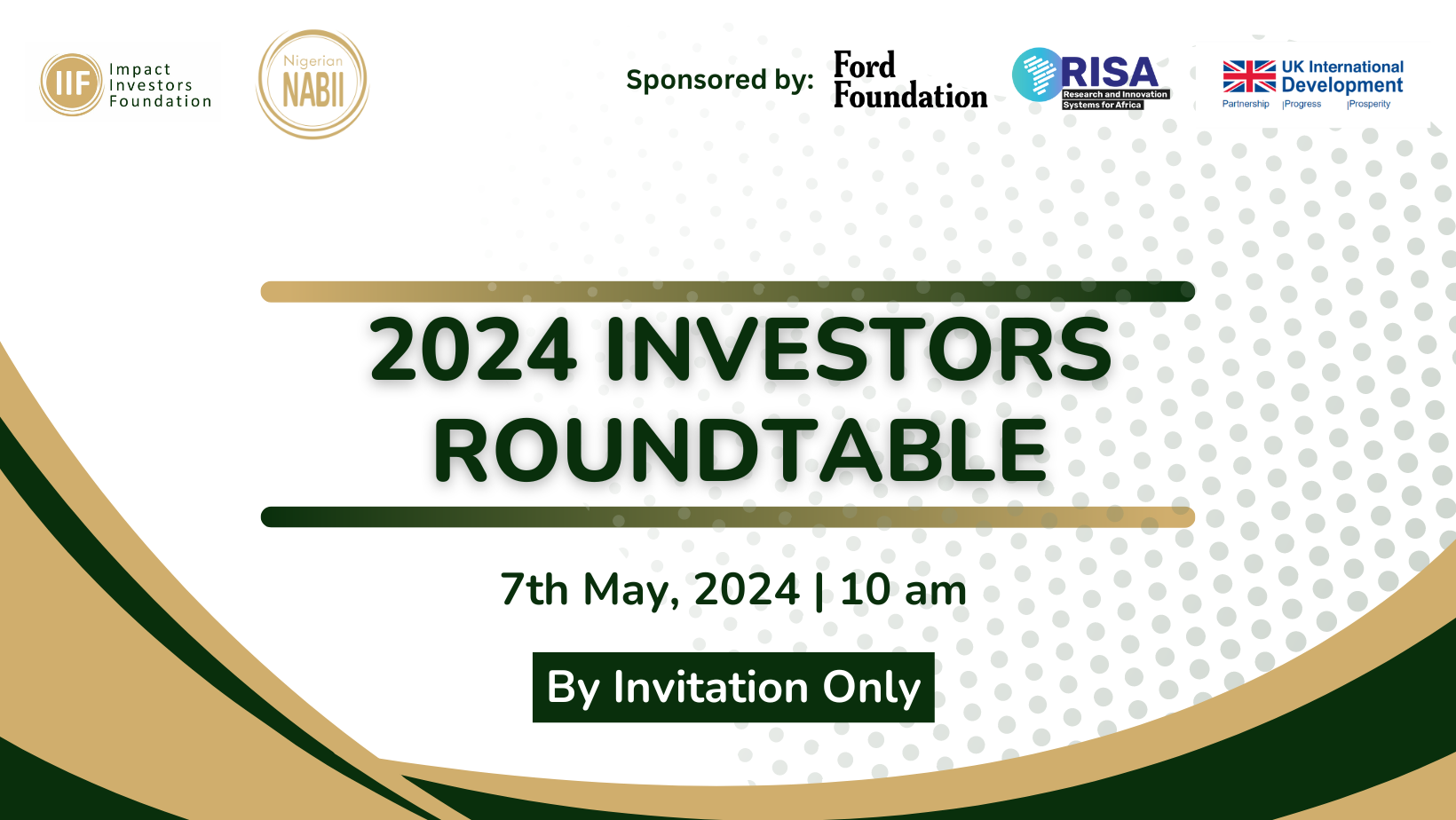
2024 Investors Roundtable

The Investors’ Roundtable presents an opportunity to pique investors’ interests ahead of the 2nd West African Deal Summit scheduled to be held on November 12-13, 2024 and the 2nd Gender Impact Summit, scheduled to be held on June 27.

News Image
IIF and the RISA Fund Launches the SSRF II project, Nigerian Enterprise Support Organisation (ESO) Collaborative to deepen research, innovation and investment in Nigeria
The Impact Investors Foundation, (IIF) Nigeria formally launches the Sustainable Systems for Research and Innovation Financing (SSRF II) project in Nigeria and the Nigerian Enterprise Support Organisation (ESO) Collaborative, marking a significant milestone in advancing Nigeria's investment and innovation landscape in Nigeria.
News Image
Nigerian NABII Launches Report, Recommends Unlocking Pension Funds for Impact Investment

Nigeria has limited capacity to provide equity funding, grants, low-cost debt financing and patient capital for MSME


November 5, 2023, Lagos, Nigeria – The Nigerian National Advisory Board for Impact Investing (NABII) has today launched its report, “Investing for Impact in Nigeria: A Deep Dive into Agriculture, Education, and Health Sectors”. It reveals that the Nigerian financial market has limited capacity to cater to MSME funding demands such as equity funding, grants, low-cost debt financing and patient capital.

News Image
Impact Investors Foundation Launches Nigerian Impact Investing Research and Industry Collaborative (NIIRIC) to drive impactful research and industry engagement

Lagos, Nigeria – August 22, 2024 – The Impact Investors Foundation (IIF) on Wednesday announced the launch of the Nigerian Impact Investing Research and Industry Collaborative (NIIRIC) at a grand event held at The Wheatbaker Lagos, Ikoyi. This groundbreaking initiative aims to catalyse the growth of Nigeria’s impact investing ecosystem by fostering collaboration, driving impactful research, and building capacity within the industry.


The NIIRIC aims to be the leading collaborative platform driving impactful research and industry engagement in Nigeria’s impact investing sector and was established with grant funding from FCDO’s Research and Innovation Systems for Africa (RISA) Fund. The NIIRIC’s mission is to coordinate, facilitate, and disseminate high-quality research, industry insights, and capacity-building programmes, that will strengthen the impact investing ecosystem in Nigeria.


Key dignitaries at the event include Mrs. Alice Omisore-Dada, the Country Technical Lead for Nigeria at RISA Fund; Dr. Chinyere Almona, Director General of Lagos Chamber of Commerce and Industry; Julius Lamptey, Senior Research and Policy Officer at Impact Investing Ghana; and Ms. Etermore Glover, CEO of Impact Investors Foundation.

“The launch of NIIRIC marks a pivotal moment for impact investing in Nigeria,” said Ms. Etemore Glover, CEO of the Impact Investors Foundation. “We believe that by harnessing the power of collaboration and research, we can unlock the immense potential of impact investing to drive sustainable development and create positive change.”

Alice Omisore-Dada, Country Lead for Research and Innovation Systems for Africa (RISA) Fund added, "The establishment of NIIRIC represents a significant milestone in our efforts to foster innovation and research in Africa's impact investing sector. By providing a platform for collaboration and knowledge sharing, we are confident that NIIRIC will play a crucial role in unlocking Nigeria's potential as a hub for sustainable and impactful investments."

The NIIRIC will focus on four key areas to achieve its mission. They are research and data generation, capacity building, policy advocacy and investor network development. At the event, eight (8) organisations were appointed as members of the Steering Committee of the NIIRIC. These organisations are Lagos Business School (LBS), Lagos Chamber of Commerce and Industry (LCCI), The Private Equity and Venture Capital Association (PEVCA), Ideanest Investments, International Center for Energy, Environment and Development (ICEED), ARI Initiative, Ashoka Africa and  ACT Foundation.

The potential for impact investing in Nigeria is immense, with opportunities across various sectors including agriculture, healthcare, education, and renewable energy. The NIIRIC aims to position Nigeria as a leading impact investing hub in Africa by providing the necessary resources and support to industry stakeholders.

News Image
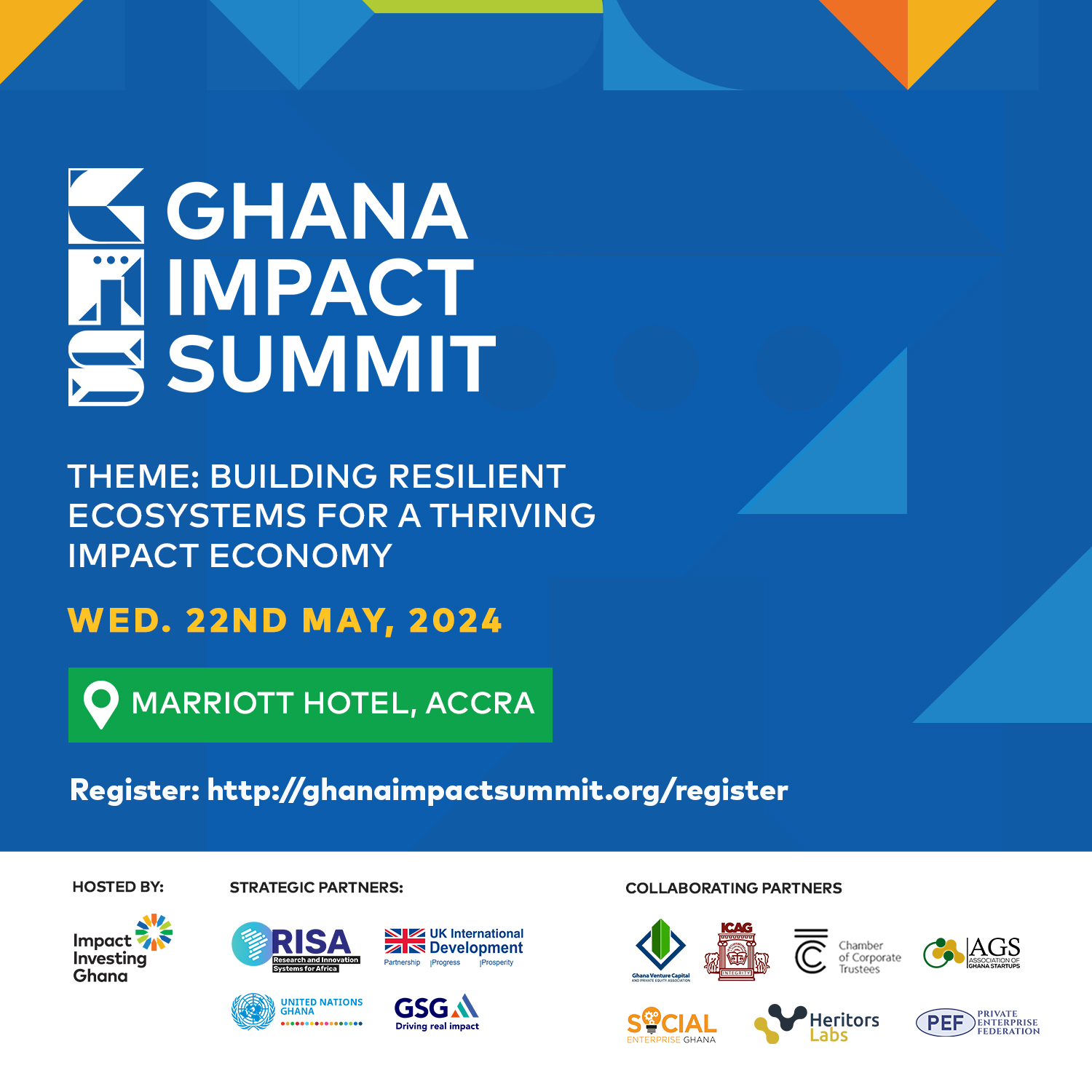
Ghana Impact Summit 2024
Join the 3rd Ghana Impact Summit 2024 as we “Build Resilient Ecosystems for a Thriving Impact Economy in Ghana”.
News Image
First West Africa Deal Summit and the Second Ghana Impact Summit
The first West Africa Deal Summit and the second Ghana Impact Summit are officially launched!